June 9
791-806- backtracked to 805
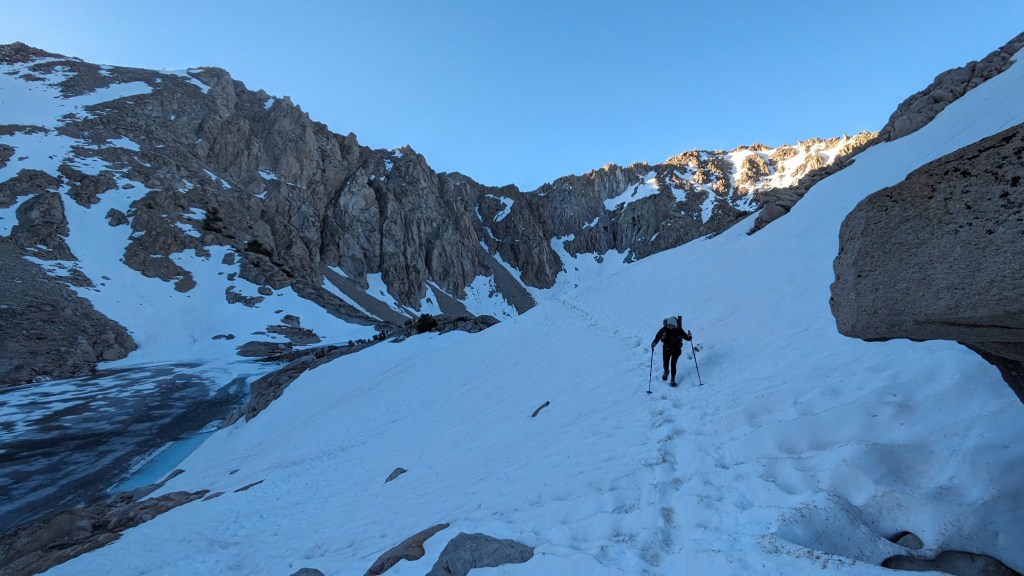
The comfort of our warm sleeping bags must be abandoned right at day break. Quickly we are above treeline and walking on top of frozen, crunchy, snow as we climb up to 11,900 foot Glen Pass- feared for its massively steep descent.
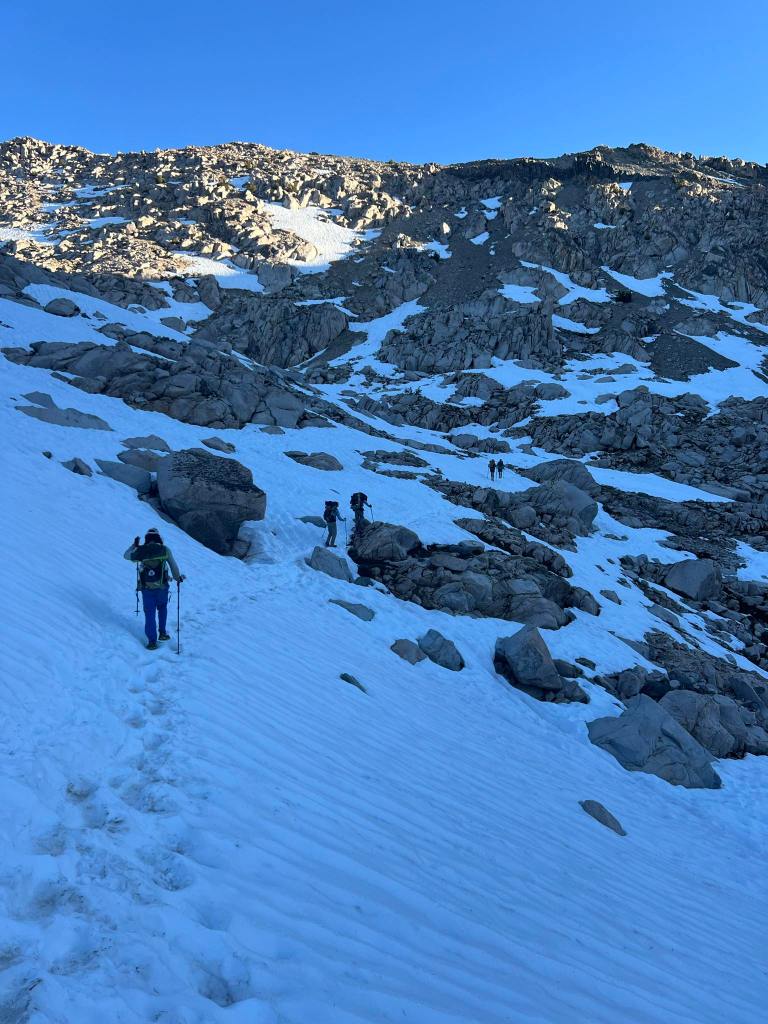
As we crest the narrow pass, we see the massive northern headwall and tiny dots of hikers walking along a snowy traverse.
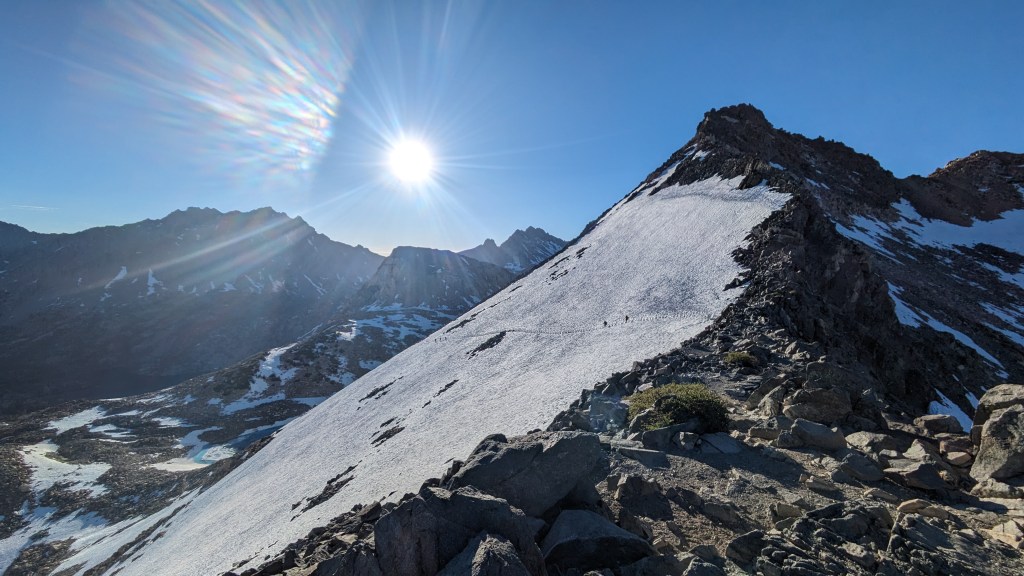
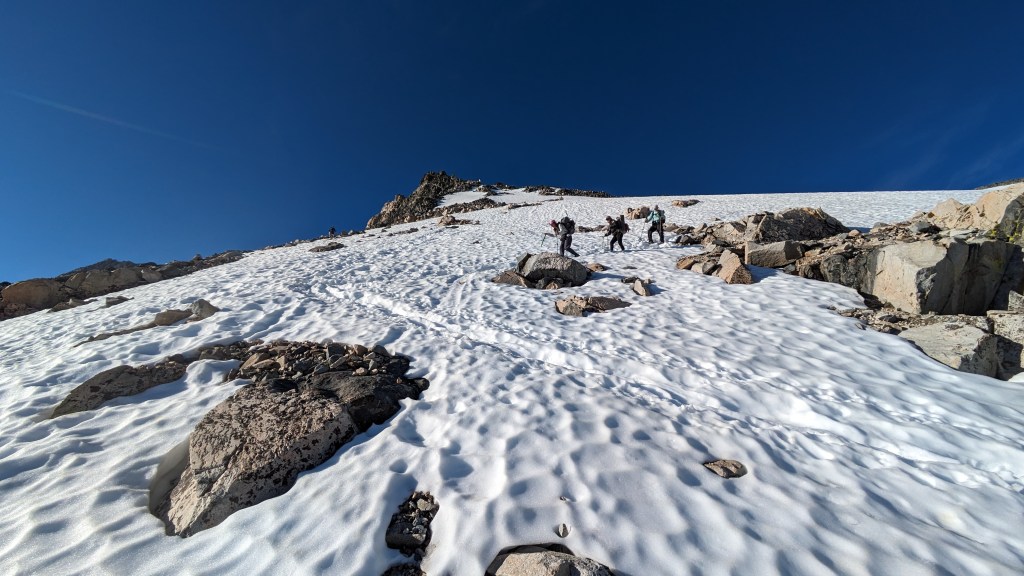
We take our ice axes off our packs, and follow the hikers ahead of us- carefully navigating the traverse over a long 55-60 degree slope.
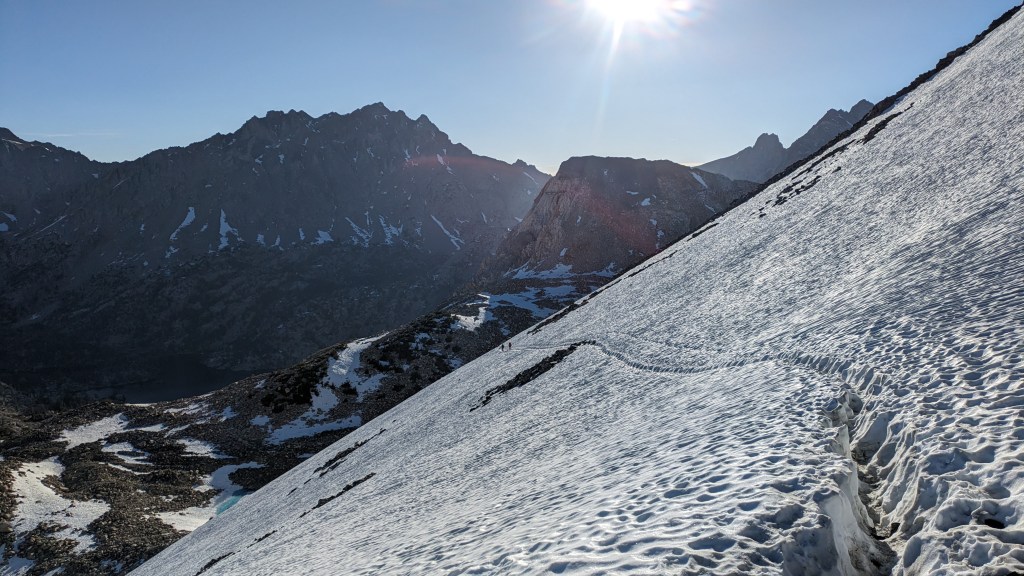
Any misstep would send us hurtling down into the rocks far below us. We get to the end of the traverse and begin descending off the pass using a technique called “self belay”, where we jam the long handle of our ice axes into the snow and use that as a fixed point to hold onto as we make sure our feet are in secure steps below us.
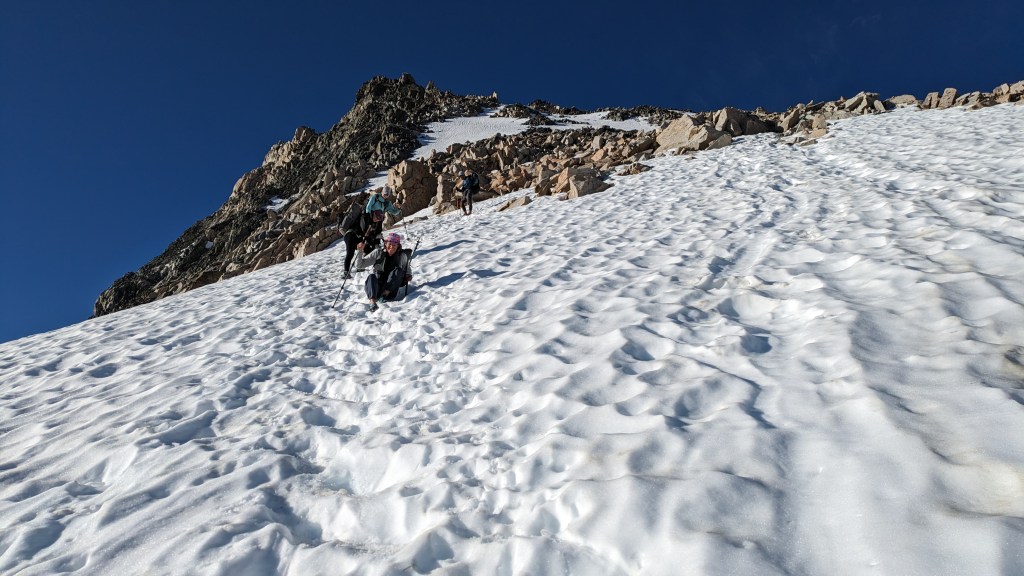
This process is repeated over and over again until we reach flatter ground and can safely walk.
During our self belay descent we catch up to a couple we previously met during our rock scramble off of Forester pass, Melissa and Looki from LA, and we help talk each other through safe descending techniques. We also run into Sunshine, a scientist from the Bay area who has also previously hiked the PCT. It is nice to be around other experienced mountaineers during high consequence stretches of these passes.
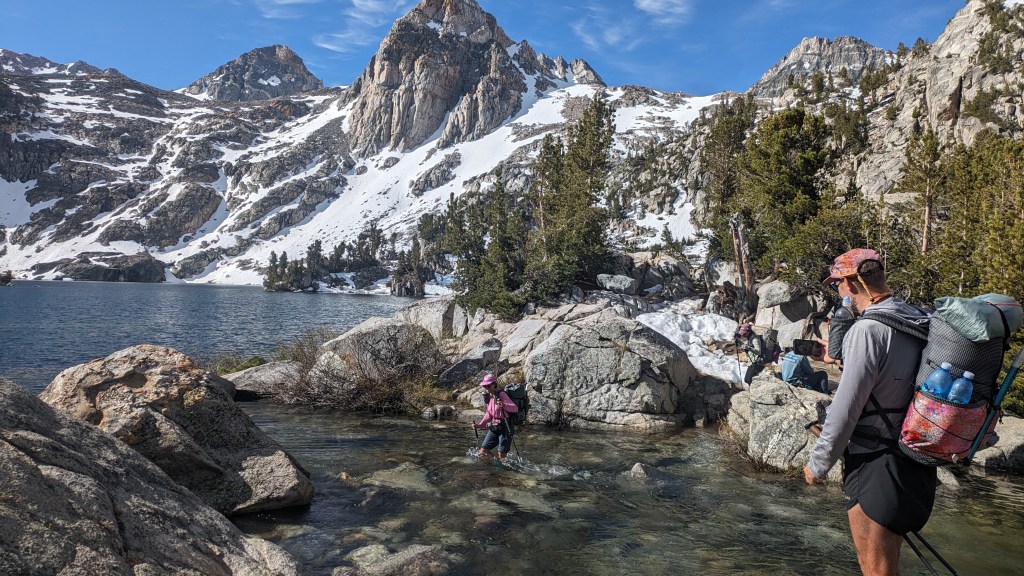
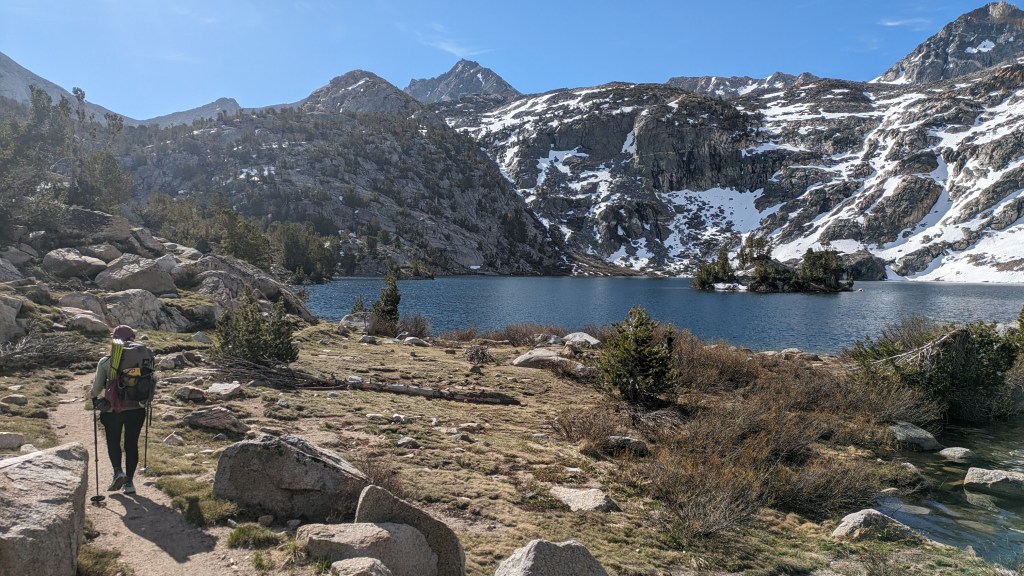
Quickly we are on flatter territory and are walking along the beautiful basin surrounding Rae Lakes. Our hope is to move quickly throughout the rest of the day and attempt our next high Sierra pass, Pinchot Pass, on the same day.
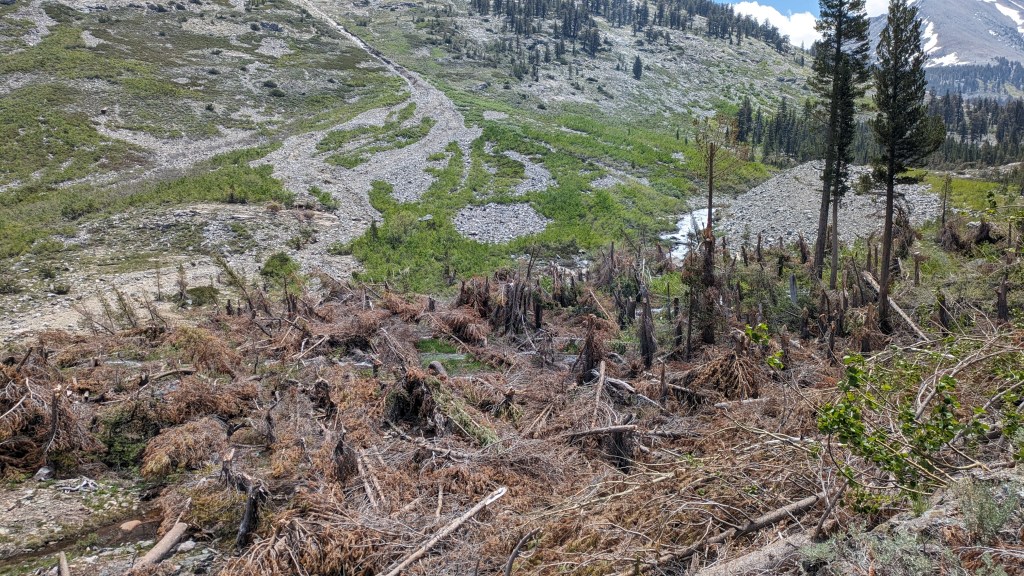
As we descend we are faced with numerous water crossings. The snow melting from all the passes and high basins flows down into the valleys, where we are usually faced with our largest crossings. An area of trees along the descent was decimated by a recent avalanche, and we have to weave our way around the remains.
I remember Pinchot Pass being a long gradual climb, and that it does not have a large headwall to navigate off of, so we have some hope to climb our second pass of the day.
We go from 11,900 at Glen Pass down to 8,500 in the valley, back up to 12,100 feet at Pinchot Pass.
It is a long slog of a climb, and we are moving quite slowly as evening approaches. As we get above 11,500 feet we see that Pinchot Pass is holding a lot more snow than we expect and it is the consistency of mashed potatoes from the heat of the sun throughout the day. Every other step sinks us to mid thigh.
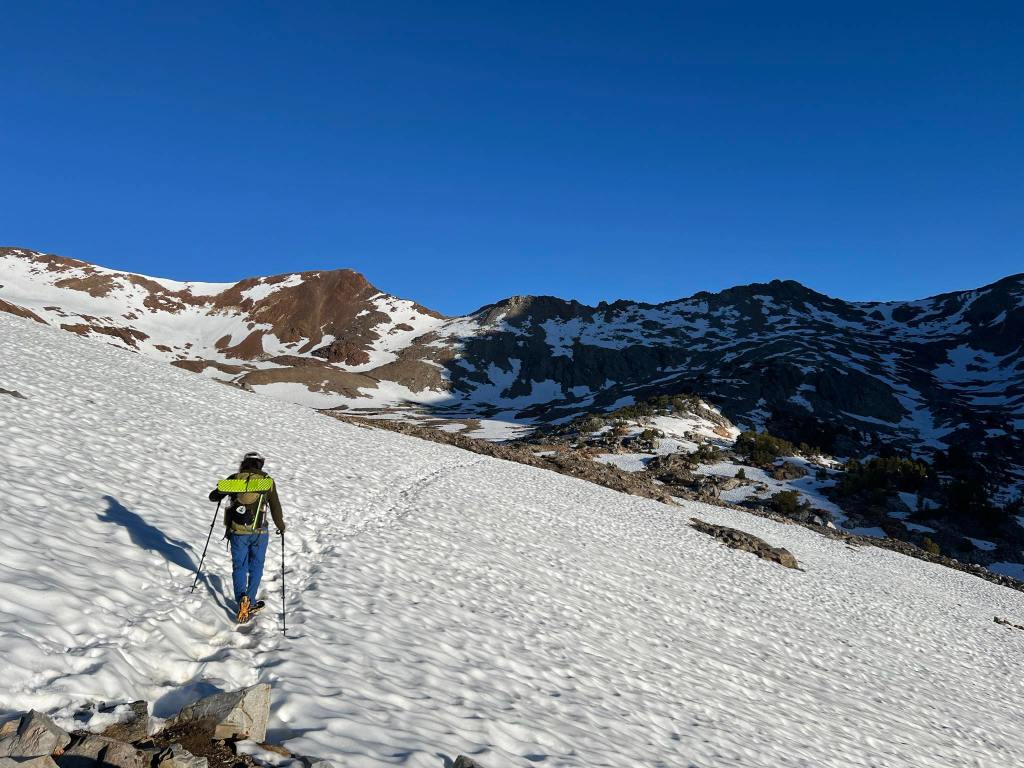
Without knowing how much snow there is on the north side of the pass, it seems dangerous to attempt to get up, over, and down before nightfall. Usually the north side holds significantly more snow due to less sun exposure.
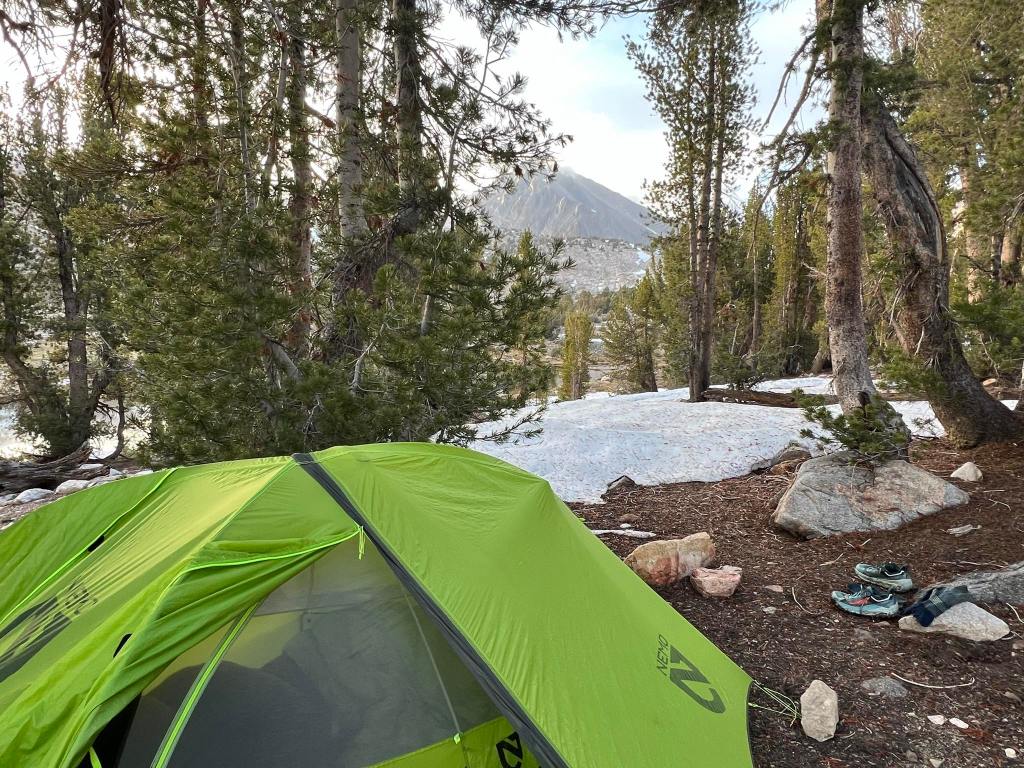
We make the decision to backtrack .5 miles to a sheltered campsite to set up for an approach early in the AM.


 Homestead Hikers
Leave a reply to wfrogge48 Cancel reply